Puberty Blockers Are Far More Dangerous Than You Think
Treatment of benign conditions in women should not result in death or serious illness! It shouldn't accelerate death for men with prostate cancer, either! Children as young as two months old die from as little as one dose of Lupron!
GnRH agnoists should never be given to children who don't have a medical condition! Having a gender identity different from their sex is not a condition that justifies taking a deadly, toxic, hazardous antineoplastic drug. They can wait until they're old enough to start cross-sex hormones if they need to transition. Puberty blockers should be completely off the table!
Everything you've been told about puberty blockers (GnRH agonists) is false. Licensed medical professionals and various organizations market "Puberty blockers" as a safe, effective, and fully reversible way to simply pause a child's natural puberty to give them time to decide if they want to pursue medicalized gender affirming care. However, this position is based on outright fabricated information.
Calling these drugs "puberty blockers" or "blockers" severely downplays the damage they cause to a child's reproductive system and nervous system. These drugs are antineoplastic chemotherapy reproductive and developmental toxicants (not by my definition--that is their official classification) proven to cause reproductive harm, along with serious organ damage and a litany of serious lifelong conditions. GnRH agonists are not reversible, nor are they safe for any child--not even children with central precocious puberty (CPP). This is not about "informed consent" or the fact that "all medicine comes with risks." Puberty blockers aren't the innocent pause button you've been told.
This is Intentional Deception
It's a vicious cycle of ignorance, and it's by design. Since the 1980s when Lupron was first introduced, warnings have slowly disappeared, study results have been acknowledged under oath to have been fabricated, doctors have admitted to getting kickbacks, and thousands of people have died--even after just one injection.
This is Not Just About Lupron
Although most of the research on this website involves Lupron (leuprolide), the same dangers apply to a variety of drugs marketed as puberty blockers. Many are made from the same generic leuprolide acetate, while other drug are made with a different active ingredient but have the same effect on the body through overstimulating GnRH receptors and downregulating the pituitary gland to suppress hormones.
Brand name leuprolide drugs include:
- Eligard
- Fensolvi
- Pedmark
- Viadur
- Camcevi
- Leuprolide Acetate Depot
(There are far more names for leuprolide, which will be linked on another page soon)
Similar drugs include:
- Supprelin LA (histrelin)
- Vantas (histrelin)
- Triptodur (triptorelin)
- Trelstar (triptorelin)
- Zoladex (goserelin)
- Synarel (nafarelin)
Myth #1: Lupron Is Safe; It's No More Risky Than Tylenol
Truth: Lupron Is Classified As a Hazardous, Carcinogenic Reproductive and Developmental Toxicant That Requires Gloves, Goggles, & Gown When Handling
The Truth About Lupron and Other GnRH Agonists
Lupron (leuprolide) is an antineoplastic chemotherapy agent categorized as a "hazardous drug" according to the National Institutes of Health (NIH), the Occupational Safety and Health Administration (OSHA), the National Institute for Occupational Safety and Health (NIOSH), and its own Material Safety Data Sheets (MSDS).
Lupron's 1990 MSDS classifies it as "hazardous per OSHA criteria" and because it's a known reproductive toxicant, it mandates that "Women of child bearing potential must be excluded from working directly with product which is not package in closed container."
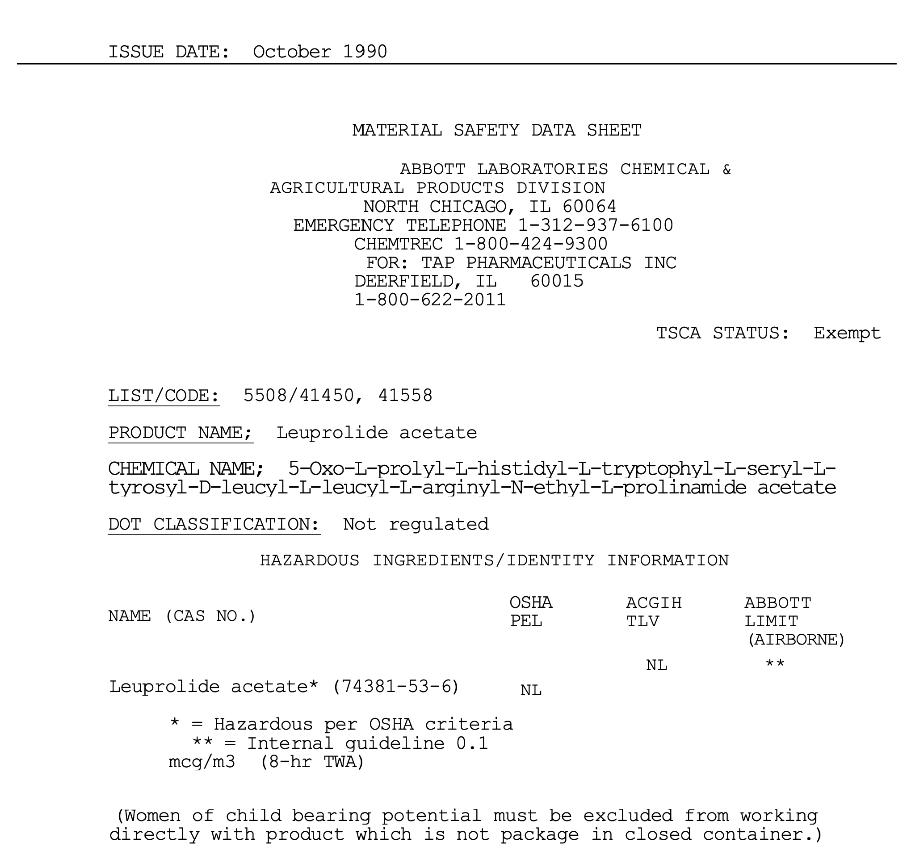
Lupron has never been found to be safe or effective for any FDA-approved or off-label use. Lupron was originally introduced in 1985 as chemotherapy for men with prostate cancer, but produced minimal effects. According to study data, most men taking Lupron for prostate cancer died within two years.
Leuprolide acetate isn't just ineffective--it's known to be dangerous and deadly. Multiple children have died during safety and efficacy trials. In both adults and children under the age of 18, Lupron is known to cause sudden death, tachycardia, interstitial lung disease, hypertension, infertility, osteoporosis, depression, suicidal ideation (including attempts and completed suicides), seizures, gastrointestinal haemorrhage, vaginal haemorrhage, arterial embolism, acute kidney injury, kidney failure, brain oedema, cerebral infarction, hypothyroidism, tachycardia, hallucinations, septic shock, haemorrhagic stroke, TIAs, Alopecia, multi-system inflammatory syndrome, respiratory failure, hepatitis, pancreatitis, diabetes, and lifelong chronic pain, chronic fatigue, and disability. And much, much more.
Lupron's MSDS Is Alarming
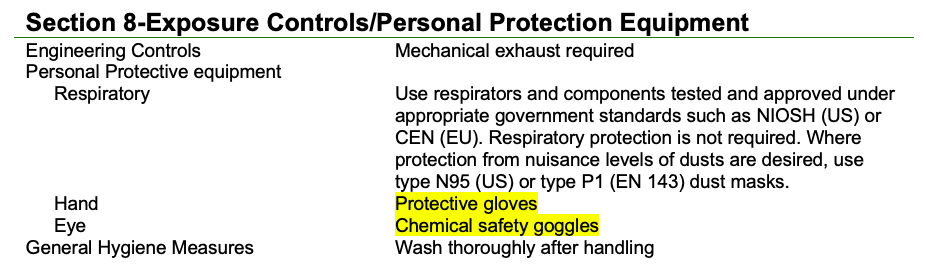
Lupron's MSDS mandates healthcare workers to wear rubber gloves, chemical safety goggles, and a gown when handling or administering the drug. It's recommended but not required to wear a respirator.
Lupron's 2008 MSDS requires "protective gloves" and "chemical safety goggles" to handle:
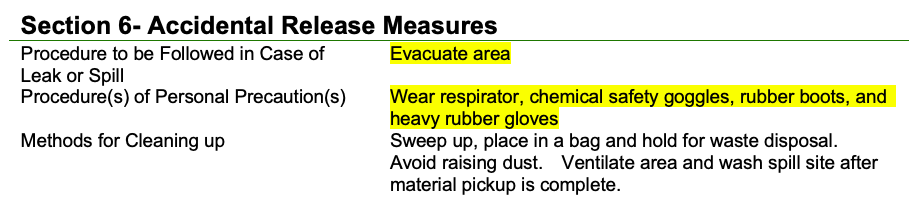
In case of a leak or spill, the MSDS says to "evacuate area" and “Wear respirator, chemical safety goggles, rubber boots, and heavy rubber gloves.
Disposing of Lupron and the materials used to prepare an injection require a professional waste disposal service. The MSDS states, "Dissolve or mix the material with a combustible solvent and burn in a chemical incinerator equipped with an afterburner and scrubber." That should be alarming considering doctors prescribe Lupron for self-injection at home.

"Leuprolide can pass into body fluids (urine, feces, vomit). For at least 48 hours after you receive a dose, avoid allowing your body fluids to come into contact with your hands or other surfaces. Caregivers should wear rubber gloves while cleaning up a patient's body fluids, handling contaminated trash or laundry or changing diapers. Wash hands before and after removing gloves. Wash soiled clothing and linens separately from other laundry."
OSHA
OSHA's 1999 Technical Manual listed Lupron as a "hazardous drug" and an "antineoplastic."
NIOSH
In 2000, the National Institute for Occupational Safety and Health (NIOSH) began working with shareholders to address the issue of occupational exposure to "hazardous drugs." The organization published an alert in 2004 (Publication # 2004-165) titled "Preventing Occupational Exposure to Antineoplastics and Other Hazardous Drugs in Health Care Settings," which identified leuprolide as one such drug.
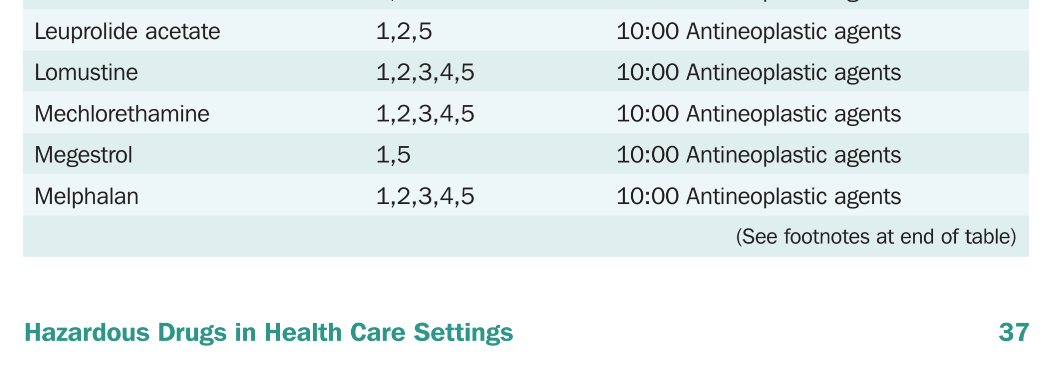
NIOSH considers leuprolide a "hazardous drug" because of its carcinogenicity, teratogenicity (developmental toxicity), reproductive toxicity, and genotoxicity. Although only one of these conditions must be met for a drug to be considered hazardous, Lupron meets all four.
Here's how NIOSH defines a "hazardous drug" from the 2004 Alert:

Lupron is not the only GnRH agonist or "puberty blocker" categorized as a "hazardous drug." Finasteride, goserelin, and triptorelin are on the same list along with Spironolactone (Black Boxed), estrogen-progesterone combination (Class 1 carcinogen), estradiol (Black Boxed), and more.
Nobody Follows Lupron's Safety Protocols
You won't find a healthcare professional--doctor or nurse--who follows the mandated safety protocol of wearing gloves, goggles, and a gown for administering and handling Lupron. Parents and patients don't follow the safety protocols either when injecting at home. It's not their fault. Lupron's classification as a "hazardous drug" along with safety protocol mandates are not included on the drug's label. Most healthcare workers are completely unaware. If doctors don't know the protocol, who's going to tell the parents and patients?
Lynne Millican said that in her 27-year career as a nurse she never once saw anyone following the safety protocols.
Myth #2: Lupron Safety Study Data Is Valid
Truth: Dr. Andrew Friedman Fabricated 80% of Data Across Four Lupron Studies
Lupron studies can't be trusted because 80% of the data commonly cited was admittedly fabricated, and most studies were conducted by employees of the manufacturer.
Study results are easy to fake until you have to hand over the actual data.
Dr. Andrew Friedman's research was central to the early clinical understanding and FDA approval of Lupron for endometriosis, but he admittedly fabricated and falsified 80% of the data in four Lupron studies, including two prominent published studies that were retracted (but still get cited). Friedman falsified data regarding the drug's effectiveness alongside "add-back" therapy to mitigate bone loss.
He admitted to:
- Creating fake patient data
- Inventing patients
- Altering medical records
- Changing dates in research notes
- Adding fabricated text to records
This matters because today's physicians employ "add-back" therapy by putting kids on cross-sex hormones while they continue to take Lupron. This approach is commonly cited as a proven way to mitigate the risk of bone loss. Healthcare professionals are unaware this approach is based on fabricated data.
Add-back therapy has never been proven to mitigate the effects of Lupron.
How did Friedman get caught?
Friedman was working as a researcher at Harvard Medical School and Brigham and Women's Hospital when his boss asked him for the raw study data. He didn't have it so he faked it and handed over fabricated data. His boss recognized that the data was printed by a printer that didn't exist when the study was done and Friedman admitted 80% of the data--that's nearly the entire study--were fabricated. He was fired and his medical license was suspended for two years.
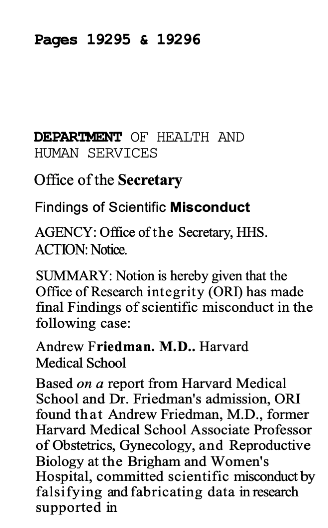
"Between 1992 and 1995, Dr. Friedman altered and fabricated information in permanent patient medical records and notes by changing dates, changing and adding text, and fabricating notes for clinical visits that did not occur. Dr. Friedman admitted that he had falsified and fabricated approximately 80 percent of the data in research reports published in...
And in an unpublished manuscript."
Both of these articles have been retracted.
Source: FINDINGS OF SCIENTIFIC MISCONDUCT, NIH GUIDE, Volume 25, Number 15, May 10, 1996
Source:
https://pmc.ncbi.nlm.nih.gov/articles/PMC4259589/
Two months later, fully aware of Friedman's scandal, Johnson & Johnson offered him a job as a consultant for a new drug that ended up causing massive strokes. Friedman was later deposed for a lawsuit involving this drug. During his deposition, when asked why he fabricated the study data, Friedman blamed his knee pain from playing tennis and said he just didn't have time to finish the studies.
You can read about this in the book Trial by Fire: One Man's Battle to End Corporate Greed and Save Lives by attorney Mike Burg--the man who deposed Friedman.
It should be noted that Friedman's studies aren't the only Lupron studies that were fabricated. In Myth #4 you'll see that raw data from other studies don't match the conclusions.
PDF File:
https://pubertyblockertruth.com/wp-content/uploads/FedRegister5_1_96.pdf
Myth #3: Doctors Weren't Incentivized to Prescribe Lupron
Truth: The Makers of Lupron Pleaded Guilty to Bribery and More
Many people believe it's just an assumption that the makers of Lupron bribed doctors to prescribe the drug as much as possible. The proof of bribery can be found in a federal lawsuit made possible by a couple of whistleblowers, one of whom spent eight years collecting evidence against the manufacturer (TAP) for the federal government.
"TAP denied the charges and argued that its sample program, educational grants and other efforts were entirely legal tactics common to many drugmakers. It was a losing hand. The feds had two highly motivated whistleblowers and had collected 500 boxes of documents. TAP pleaded guilty in October 2001 to what the government said was a nationwide conspiracy that included encouraging doctors to illegally bill for free samples, bribing them to get them to prescribe Lupron and reporting bogus wholesale prices to dupe Medicare into overpaying. It agreed to pay $885 million in restitution, fines and interest."
Lupron was highly profitable in the 1990s.
"The drug went for $400 a dose, and Medicare covered 80% of the cost."
Many urologists admitted to prescribing Lupron despite not believing it was effective. They did it for the money.
Source:
https://www.forbes.com/forbes/2005/0314/090.html
Archive:
https://web.archive.org/web/20260517034224/https://www.forbes.com/forbes/2005/0314/090.html
PDF File:
https://pubertyblockertruth.com/wp-content/uploads/TAP-settles-lawsuit-for-kickbacks.pdf
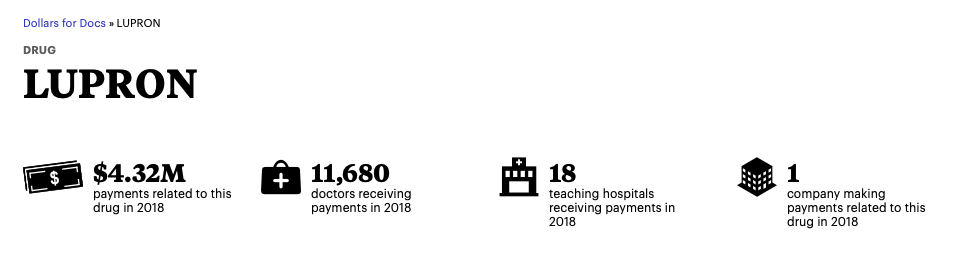
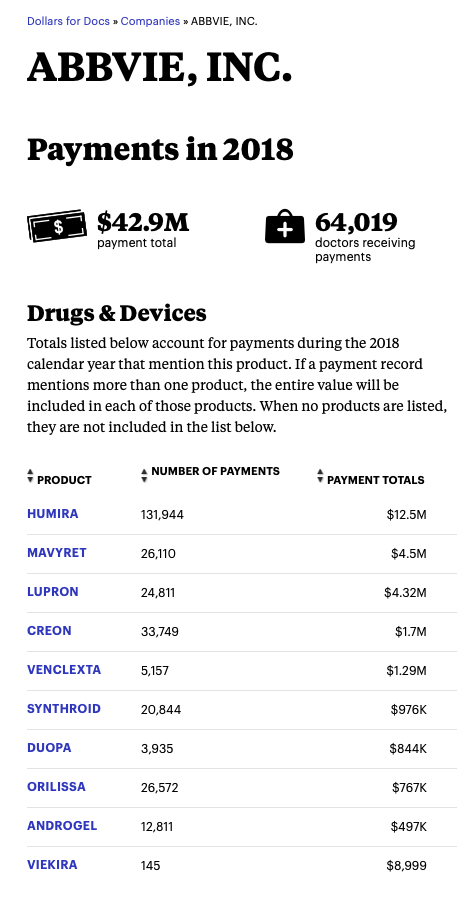
"In 28 months (August 2013 through December 2015), ABBVIE (TAP) made 69,173 payments related to Lupron for a sum of $16.9 million to 24,910 doctors,"
Myth #4: Puberty Blockers Are Proven to Be Fully Reversible
Truth: Studies Found The Effects of Lupron Are NOT Reversible
The talking point that Lupron and other GnRH "puberty blockers" are "fully reversible" is baseless. Despite Lupron's 1990 MSDS claiming all effects are reversible, studies (and real people's experiences) found the opposite. It's not reversible and does irreparable harm to the reproductive system and nervous system. Studies were published alleging reversal but the raw data tells a different story.
"In a review of the endometriosis clinical trials’ raw data, Dr. David Redwine discovered that the raw data did not support the claims by the company. In one example, Redwine’s analysis revealed that:
'62.5% of women had not regained baseline estrogen levels one year after stopping Lupron... This is definitive evidence of long-term damage to ovarian function.'
Contrary to the raw data, Lupron’s endometriosis label states the effects of Lupron “are reversible upon discontinuation."
You can view his presentation here and see the raw data for yourself. It doesn't match the conclusion and is clearly fabricated. If this video gets removed from YouTube I will upload a copy and link it here.
Alternatively, here's a video embed:

Many people dismiss these study results by saying they don't apply to children taking Lupron to halt puberty because the women who took it for endometriosis took higher doses for longer periods of time. However, that's not true. In many cases their doses were identical and many only received one or two shots total. Meanwhile, children are being given one shot every three months for up to two years.
All of this matters because the entire premise behind "puberty blockers" is their complete reversibility. Actual study data does not support this position.
Source:
https://hormonesmatter.com/lupron-money-trail/
Archive:
https://web.archive.org/web/20260517040656/https://hormonesmatter.com/lupron-money-trail/
PDF File:
https://pubertyblockertruth.com/wp-content/uploads/The-Lupron-Money-Trail-Hormones-Matter.pdf
This is just a summary of what they're not telling you about Lupron. The full details and history of this drug can be learned by visiting the pages linked in the main menu.
Read Lupron and Trelstar reps fight over the release of Lupron's 6-month dose:
In a Cafepharma Message Board post ("2-14-11 at 3:23 pm"), an anonymous poster states: "The 6 Month dosage of Lupron will KILL patients. That's the real story here. Then finally the FDA will wake up and take Lupron off the market. It's being illegally marketed AGAIN for IVF, and Abbott made the Wall Street Journal three times in one week (December 2010) for illegal marketing of stents and drugs. When will the corruption finally end? It's widely acknowledged that Lupron isn't a cure for anything, and does more harm than good."
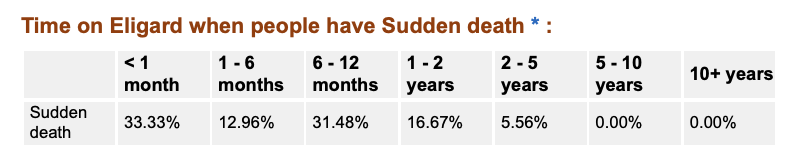
"Well, six month Eligard causes sudden death. Eligard is the same as Lupron, right? Both are leuprolide acetate, just different brand names."
THE BRAND "ELIGARD" HAS 4,647 REPORTS OF SUDDEN DEATH AS OF 2026!
Source:
https://www.ehealthme.com/ds/eligard/sudden-death/
PDF File:
https://pubertyblockertruth.com/wp-content/uploads/Trelstar-Lupron-Reps.pdf
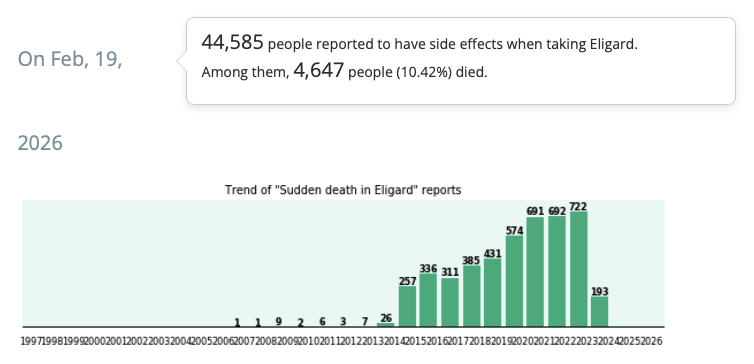
If you add the number of reported deaths from Lupron and Eligard combined based on former data, you get 7,733 deaths. However, more recent data taken directly from AERS places reports of leuprolide acetate deaths at 8,519. Considering less than 1% of people report adverse events, the true number of deaths is likely tens of thousands, if not hundreds of thousands.
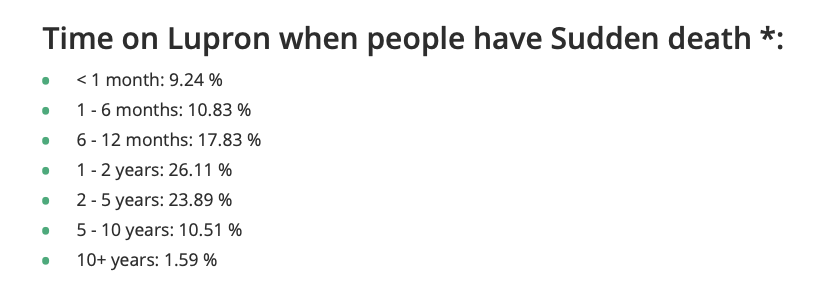
More people report death as an adverse event after taking leuprolide acetate for a 1 month to 2 year range. Two years is the time frame doctors claim is safe for children to take these drugs to avoid harm. However, Lupron's labels originally stated it was only safe for 6 months. But even that is a lie. It's not safe at all. Thousands of people die after just one dose.
To report an adverse event after taking any kind of puberty blocker, send a MedWatch Report to the FDA.
Lynne Millican Made This Website Possible
This website is primarily powered by Lynne Millican's research previously published on Lupron Victim's Hub (no longer online). My goal is to organize and re-publish her research to make it easily accessible to the public, and add my own research to create a massive repository of data on the suppressed dangers of puberty blockers and cross-sex hormones. I have personally verified and preserved every source she provided; I've read every word of every insert, label, document, and lawsuit, and I recommend that everyone do the same--especially if you're skeptical.
Lynne Millican did all the hard work and laid the foundation. Now it's time to get this information in front of the right people: concerned parents, teachers, and even medical doctors who have been misled by the pharmaceutical industry via intentional deception.
 Lynne was a registered nurse and paralegal who suffered devastating injuries from taking Lupron in the late 1980s and early 1990s. In 1998, she founded the Lupron Victims Hub and spent nearly three decades fighting as a tireless advocate for those harmed by the drug. Known for her relentless research, support for victims, and refusal to stay silent, Lynne became one of the most recognized voices speaking out about the long-term effects associated with Lupron. She passed away on July 7, 2024, at the age of 67, after being hospitalized more than 60 times for serious medical complications linked to her injuries.